Unit counts match headcount, not guesswork The industry baseline most event planners work from is the Portable Sanitation Association International guideline of roughly one unit per 50-100 guests for a 4-6 hour event,…
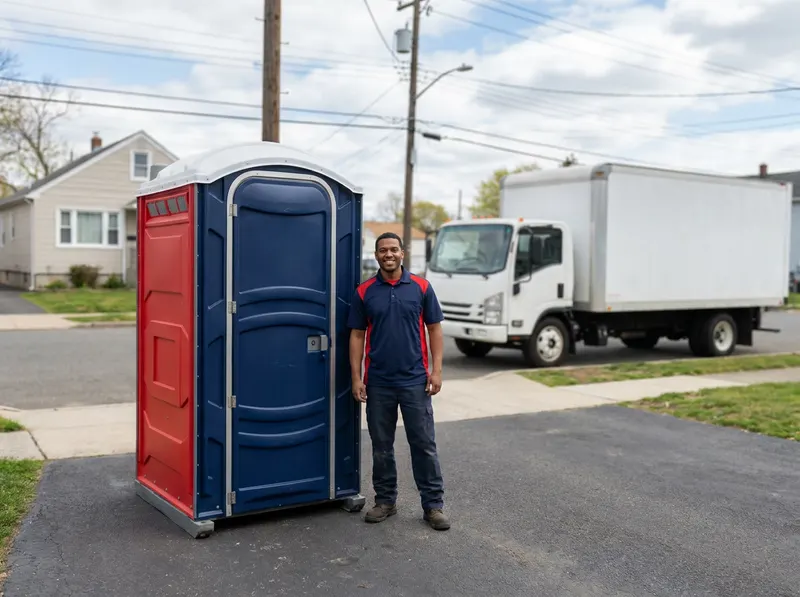
The industry baseline most event planners work from is the Portable Sanitation Association International guideline of roughly one unit per 50-100 guests for a 4-6 hour event, with alcohol service and all-day duration pushing the ratio toward the higher end. A 500-person Branch Brook Park gathering during the Cherry Blossom season therefore commonly needs 6-10 units plus hand-wash stations, while a 1,000-attendee stretch at Riverfront Park or a block festival in the Ironbound trends toward 12-20. The Portable Sanitation Association International publishes these planning ratios, and they are the starting point our team uses to size the package.
If-then guidance: if your event runs under 4 hours with no alcohol, plan near 1 unit per 100; if it runs all day with beer and food, plan near 1 per 50.
Step 1, you share the Newark address, headcount, hours, and whether alcohol is served. Step 2, our team calculates the unit count and confirms whether a mid-event service visit is needed. Step 3, delivery is scheduled 2-5 days out.
Step 4, units are placed on firm, level ground with clear truck access on event morning or the day prior. Step 5, pickup and a final pump-out happen after the event closes. For multi-day setups at venues near the New Jersey Performing Arts Center or the Prudential Center, servicing between days keeps tanks from reaching capacity, which the CDC hygiene guidance ties directly to usable, sanitary facilities for large crowds.
Every High-Traffic Event Unit Package includes at least one wheelchair-accessible unit, because ADA accessibility requirements apply to public events, and the common rule of thumb is one accessible unit for every 20 standard units, with a one-unit minimum.
Hand-wash or sanitizer stations ship alongside the toilets; a typical ratio is one hand-wash station per 2-4 units. Placement matters in Newark's tighter venues: units set near a Weequahic Park field edge or a Military Park corner need 3-4 feet of clearance for the service truck hose and a flat pad so the unit does not list. A portable toilet rental is a delivered-and-serviced product, not a self-clean arrangement - event staff never open or empty the tanks, and the OSHA 1926.51 sanitation standard covering jobsite toilet provision is the same framework that informs servicing intervals for crowded sites.
The deciding factor is sustained concurrent demand.
A small backyard party in Forest Hill or a 40-person gathering in Roseville is served by one or two standard units from the basic rental line; the trade-off there is simplicity and a lower cost. The High-Traffic Event Unit Package fits when peak lines would otherwise form - a South Ward community festival, a University Heights campus event, a North Ward parade staging area, or a Central Ward concert where hundreds use facilities in the same hour. The trade-off is more units, more ground space, and a higher total, balanced against short wait times and units that stay serviceable from the first guest to the last.
For waste-handling and disposal practices tied to large events, the EPA and regional guidance from the New Jersey Department of Environmental Protection set the disposal standards our team follows. Event safety and crowd-flow planning references from Ready.gov and venue-load figures from local permitting through the City of Newark help confirm placement near pedestrian routes without blocking egress. General site-sanitation planning resources are also published by the National Institute for Occupational Safety and Health.
Every job gets a firm, written price after an on-site visit.
Tell us about your high-traffic event unit package job in Newark and we'll send a clear, written quote, usually the same day.
 Ironbound Portable Toilet Rental