OSHA sanitation standard 29 CFR 1926.51 requires one toilet for up to 20 workers on a construction site, and a second unit once the crew passes 20. A 10-person framing crew in the South Ward runs fine on one standard…
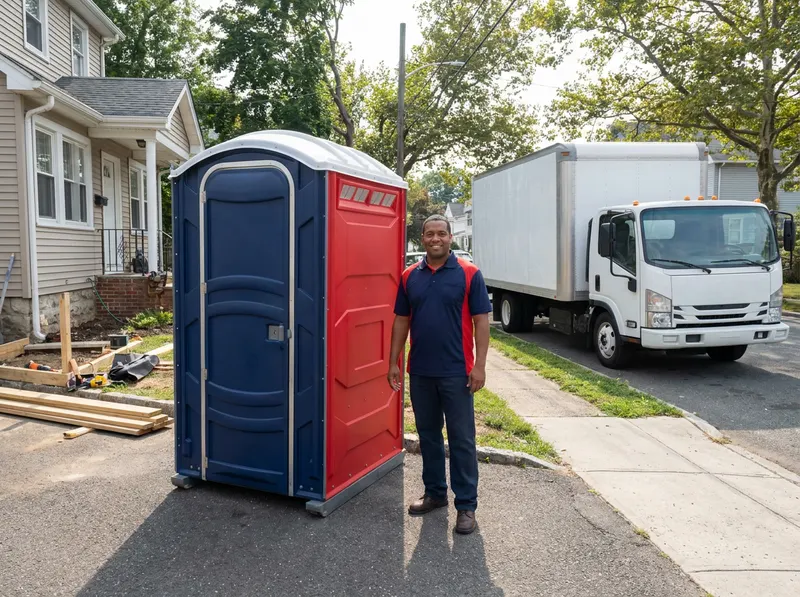
OSHA sanitation standard 29 CFR 1926.51 requires one toilet for up to 20 workers on a construction site, and a second unit once the crew passes 20. A 10-person framing crew in the South Ward runs fine on one standard unit with weekly service; a 25-person concrete pour in University Heights needs two units on the schedule. If the site has no water hookup, a standalone hand-wash station pairs with the toilet to meet the handwashing requirement, a factor on tight infill lots common through Roseville and Vailsburg.
Decision-fit comes down to crew size, run length, and access. A single standard unit fits a home renovation or a small remodel in Forest Hill running one to three months. A multi-story build near the Prudential Center or a Riverfront Park infrastructure job usually needs a deluxe flushable unit or a unit paired with a hand-wash station for a larger, longer crew, the trade-off is a higher monthly rate against fewer service interruptions and a cleaner unit that holds up over a 6-to-12-month build. For a demolition or a short 2-week utility dig in the North Ward, a monthly rental still applies because the $250 minimum covers the delivery-and-pickup round trip regardless of the shorter window.
Placement matters on Newark's dense blocks. A truck needs about a 10-foot clear path and level ground within reach of the service arm, which is why Ironbound sites tie the unit to the fence line near the gate rather than the interior. Streets around Newark Penn Station and the Central Ward that carry meters or loading zones can require a right-of-way permit from the City of Newark if the unit sits on the sidewalk or curb lane instead of on private site ground, placement fully inside the fenced lot avoids that step.
How it works in order: 1) call or text the site address and worker count; 2) a placement spot and delivery date are confirmed, usually within 24-48 hours; 3) the unit arrives and is set on level ground inside the site; 4) a driver returns weekly to pump, restock paper and sanitizer, and clean the interior; 5) the unit is picked up on the end date after a final pump. A dirty, overdue unit on a job site is a service-schedule failure, not a rental limit, the weekly route exists to prevent it.
Every job gets a firm, written price after a free on-site visit.
Tell us about your construction site toilet rental job in Newark and we'll send a clear, written quote, usually the same day.
 Ironbound Portable Toilet Rental