An ADA-accessible unit differs from a standard portable toilet in three measurable ways: the entry sits at ground level so a wheelchair rolls straight in with no lip to clear, the interior clears about a 60-inch…
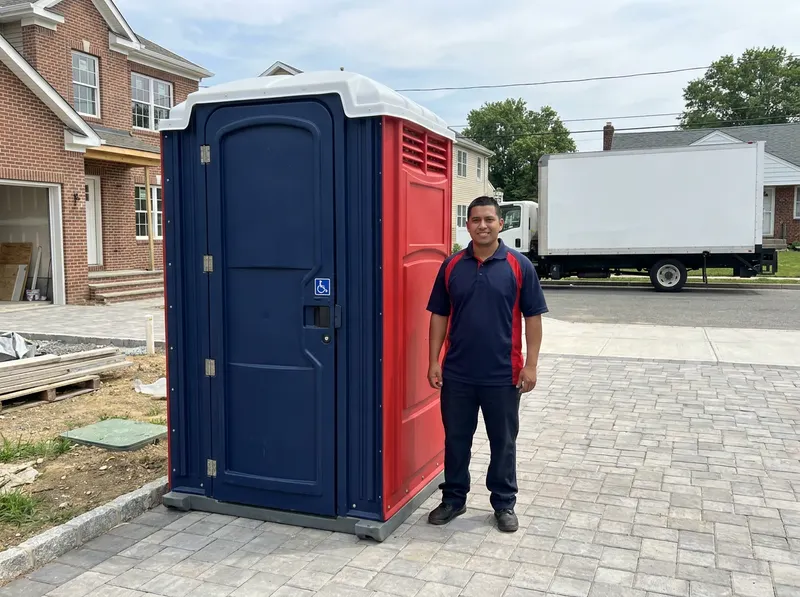
An ADA-accessible unit differs from a standard portable toilet in three measurable ways: the entry sits at ground level so a wheelchair rolls straight in with no lip to clear, the interior clears about a 60-inch turning circle, and grab bars run along two walls at seated height. The Americans with Disabilities Act requires that a public or event site with portable restrooms provide at least one accessible unit; on smaller events one ADA unit typically covers the requirement, while larger crowds add capacity in a set ratio. Placement matters more than with a standard unit, the door must open onto a firm, level surface so the ground-level entry stays flush, which rules out soft grass edges at Branch Brook Park or a sloped driveway without a plywood or mat base.
Decision-fit comes down to the site. An outdoor wedding on the lawns near the New Jersey Performing Arts Center, a street festival in the Ironbound, a 5K staging area at Weequahic Park, or a public-facing job site in the Central Ward all need at least one ADA unit to serve guests or workers who use wheelchairs, walkers, or canes. A standard unit fits a fenced construction site with an able-bodied crew and no public access; the trade-off is that a standard unit has a step-up entry and a tighter interior, so if any attendee or worker needs seated transfer room, the ADA unit is the correct choice. If a Newark event is open to the public, a Riverfront Park gathering, a Military Park vendor row, a Forest Hill block party, the ADA unit covers the access obligation that a standard bank of units does not.
Placement across Newark neighborhoods follows the same rule: a flat, reachable spot within about 25 feet of where the service truck can pull up. Ironbound side streets, North Ward residential blocks, South Ward event lots, West Ward and Vailsburg community fields, Roseville, and University Heights near the college campuses are all inside the standard service area. On permit-controlled or metered streets the placement address may need a right-of-way permit from the city before the unit drops, that is confirmed at booking, not at invoice.
How the rental runs in plain steps: 1) you give the Newark placement address, the dates, and how many days the unit stays; 2) the placement spot is checked for a level 5x5-foot surface and truck access; 3) the ADA unit is delivered and set with the door swing toward open, firm ground; 4) waste is pumped and the unit restocked on the agreed service schedule; 5) the unit is picked up on the end date. Pricing is inclusion-based, the quoted number states what is covered, and the $250 minimum applies to every Newark order regardless of neighborhood or event size.
Every job gets a firm, written price after a free on-site visit.
Tell us about your ada-accessible portable toilet rental job in Newark and we'll send a clear, written quote, usually the same day.
 Ironbound Portable Toilet Rental